… We have compiled some industry info to help you know where to start and how things work
This content is provided for general informational purposes only and may include third-party information. Smith & Sons Fuels does not guarantee its accuracy or completeness and assumes no liability for its use. Always consult a qualified professional or manufacturer for specific guidance.
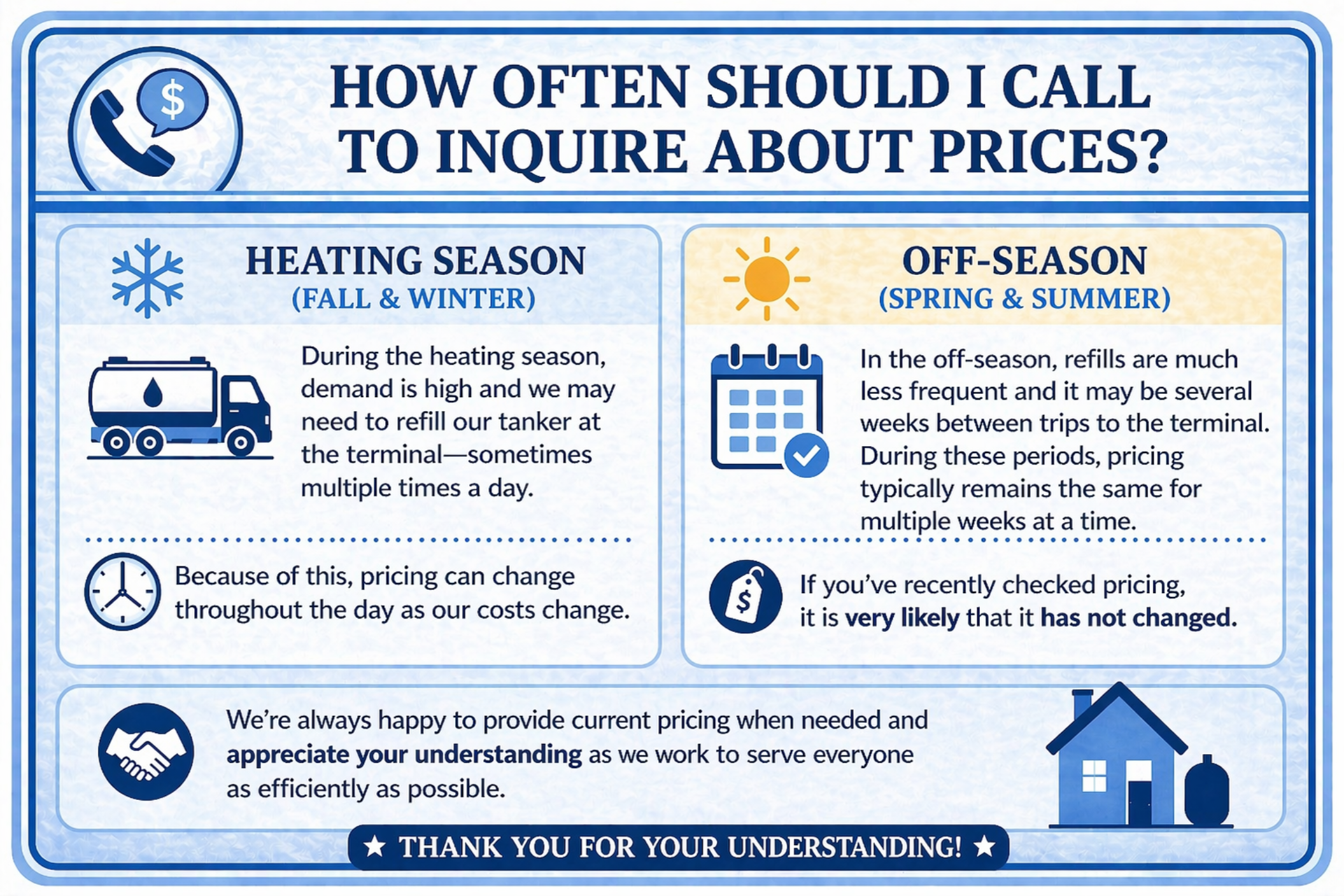
For additional industry info please visit noraweb.org
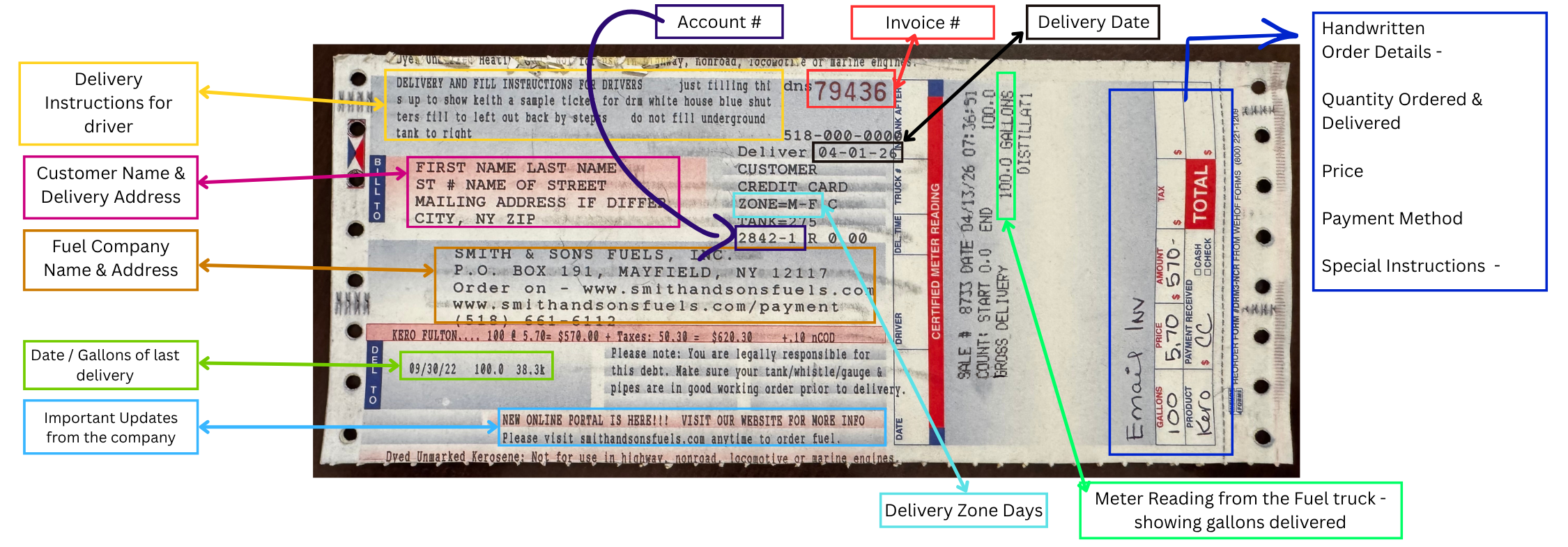
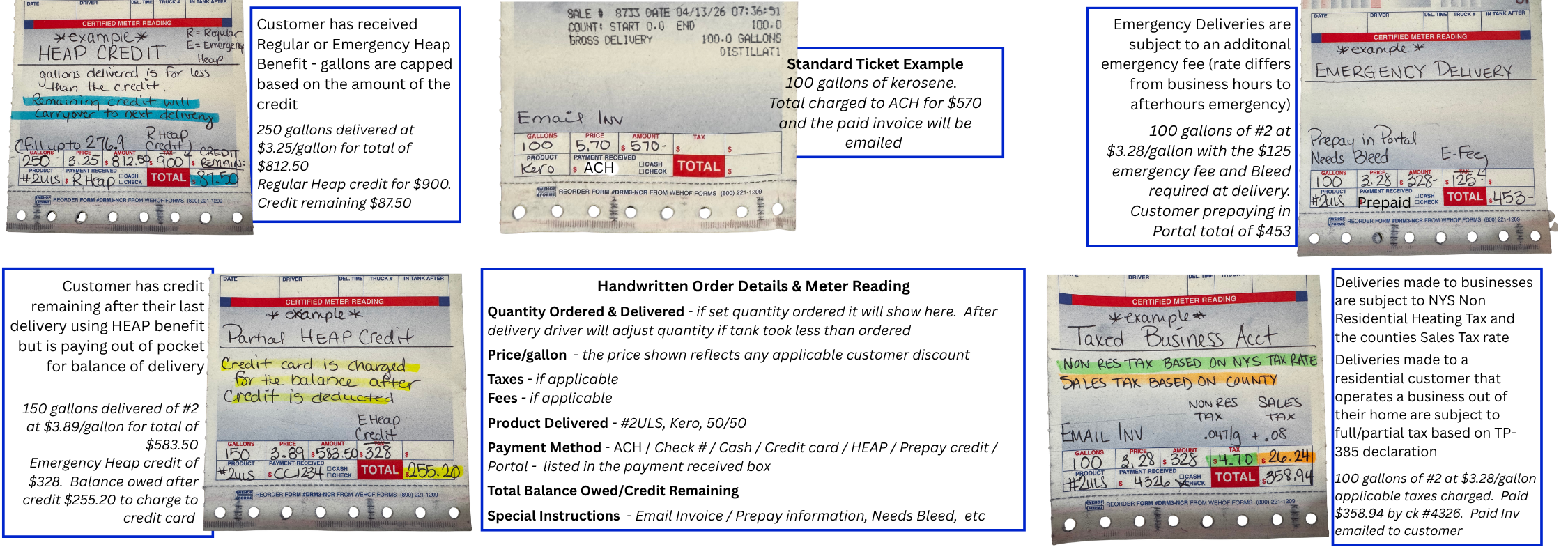
How to Read your Meter Ticket …

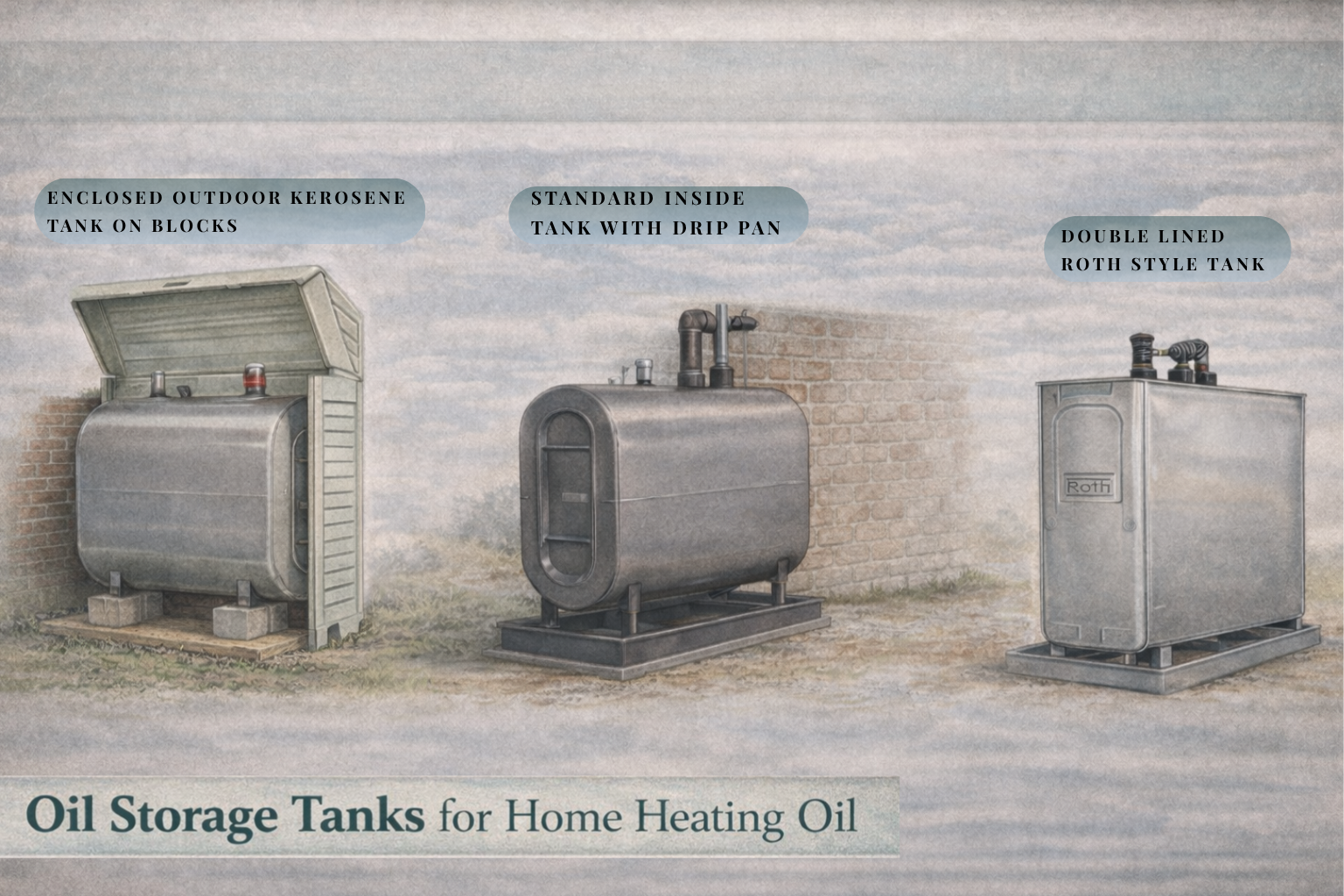
Fuel tanks should:
Be free from rust, wet spots, snow and ice.
It is best to periodically inspect the exterior of the tank to look for signs of degradation
As tanks age, it is possible for the tank to develop pin hole leaks from the inside out, which you would not always see from an exterior inspection.
We recommend putting a drip pan underneath to catch any oil from pin hole leaks or valve drips.
Have stable legs and be in a level position.
If the tank is outdoors ideally there should be blocks under the feet to keep it from sinking into the ground
Have a working whistle
This indicates to the driver when to stop pumping and not cause a spill by overfilling the tank
Typically, tanks should be replaced every 15-20 years and installed & tested by a trained service professional.
Tanks can be purchased from:
Your service company
Security Supply in Johnstown
Lowe’s or Home Depot in Amsterdam
Allen & Palmer in Northville
Standard fill pipes are 5’ or less from the ground with 10” tank legs.
Customers with fill pipes that are more than 5’ from the ground may need to put a ladder out on delivery so that our drivers could reach fill.
Our drivers need to be able to safely access the fill in all weather climates and your cooperation is appreciated.
It is most common to see households have a standard 275 gallon tank
We recommend a larger tank or multiple tanks if you have a bad driveway and have to get 1 to 2 deliveries a year during the off season.
Proguard offers residential oil tank cleanup and replacement insurance 1-888-354-0677 or https://proguardplans.com/get-coverage/.
Roth style tanks may come with their own warranty coverage.

We offer #2 in home heating oil ; kerosene ; 50/50 blend (mix of kero & #2)
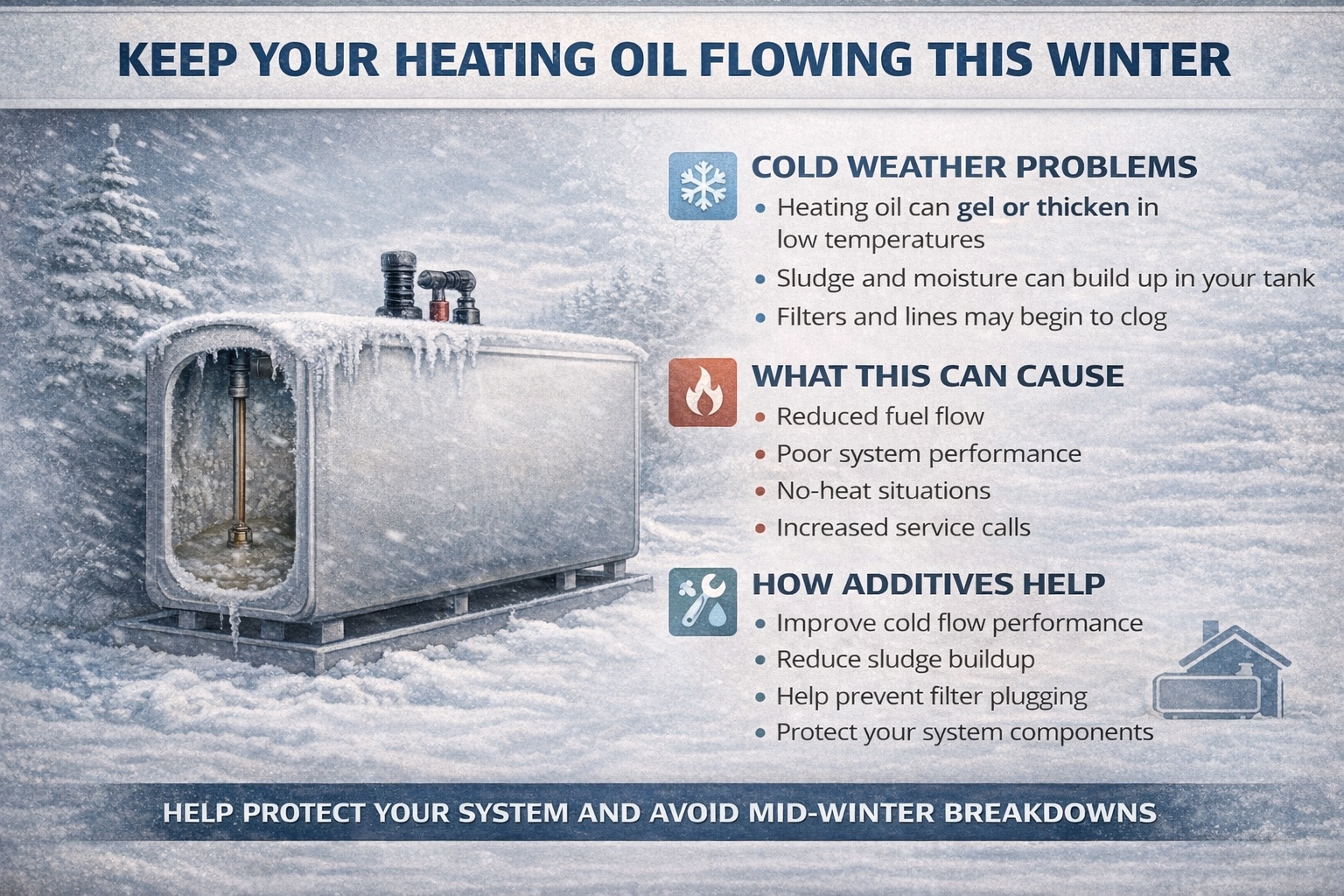
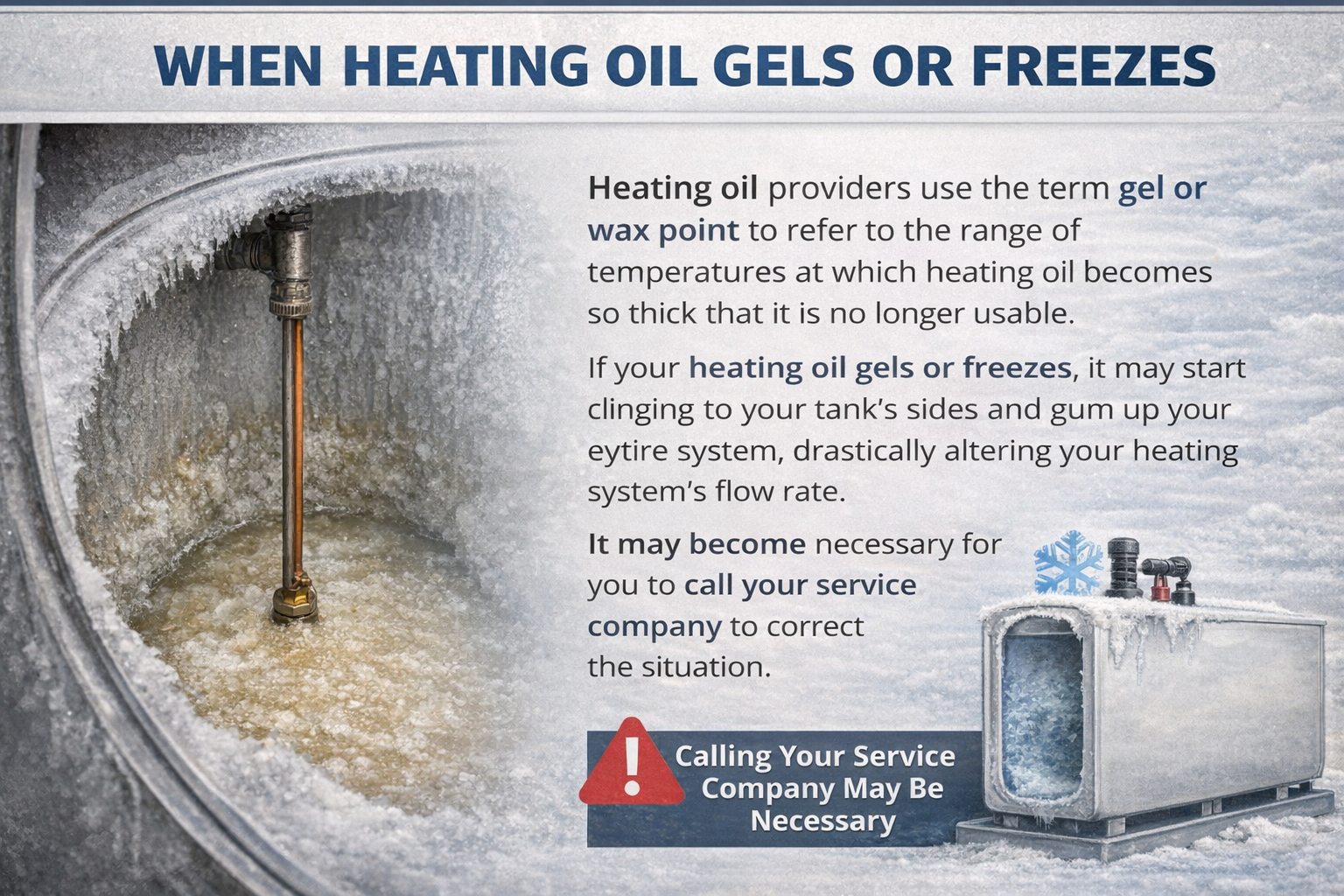
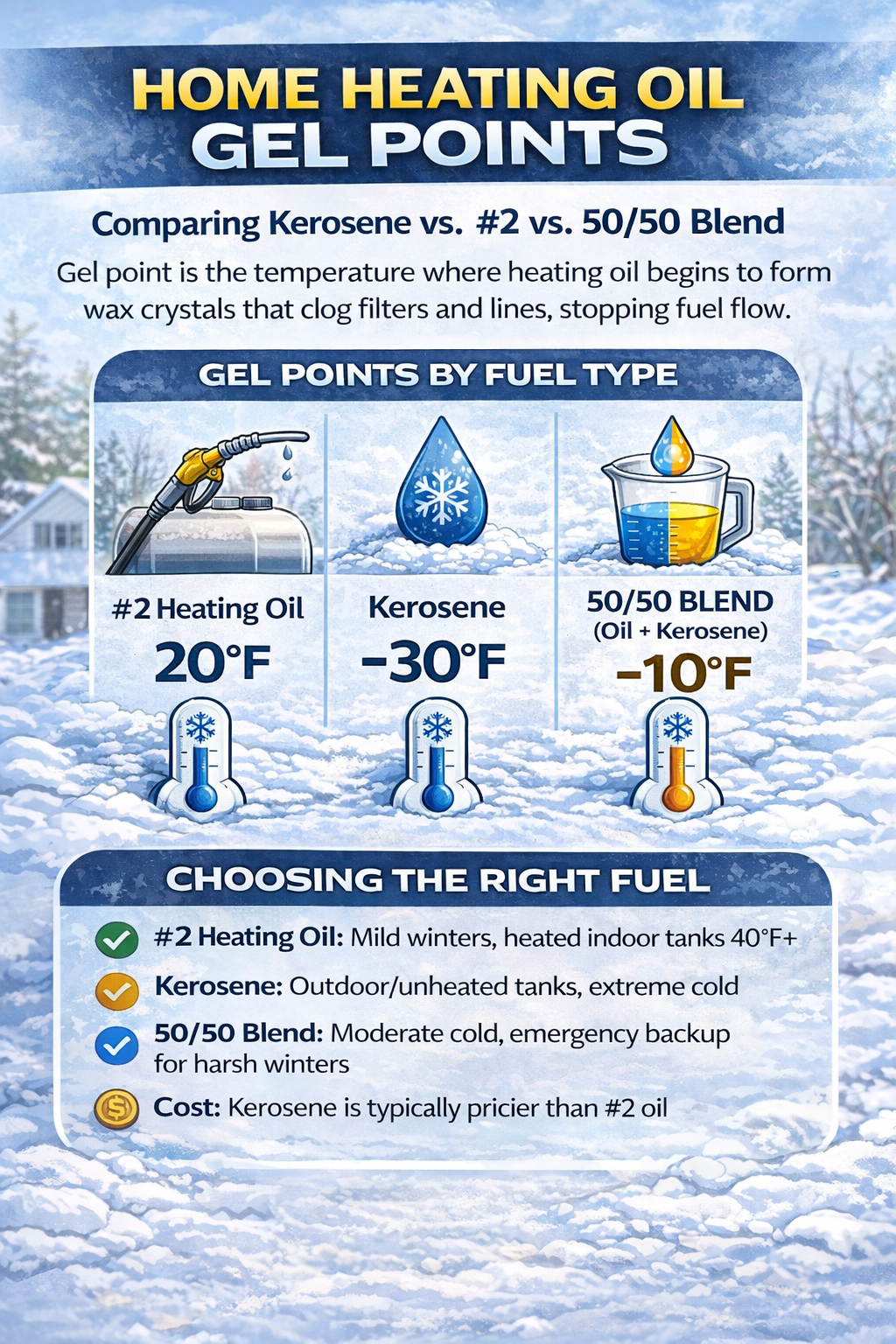
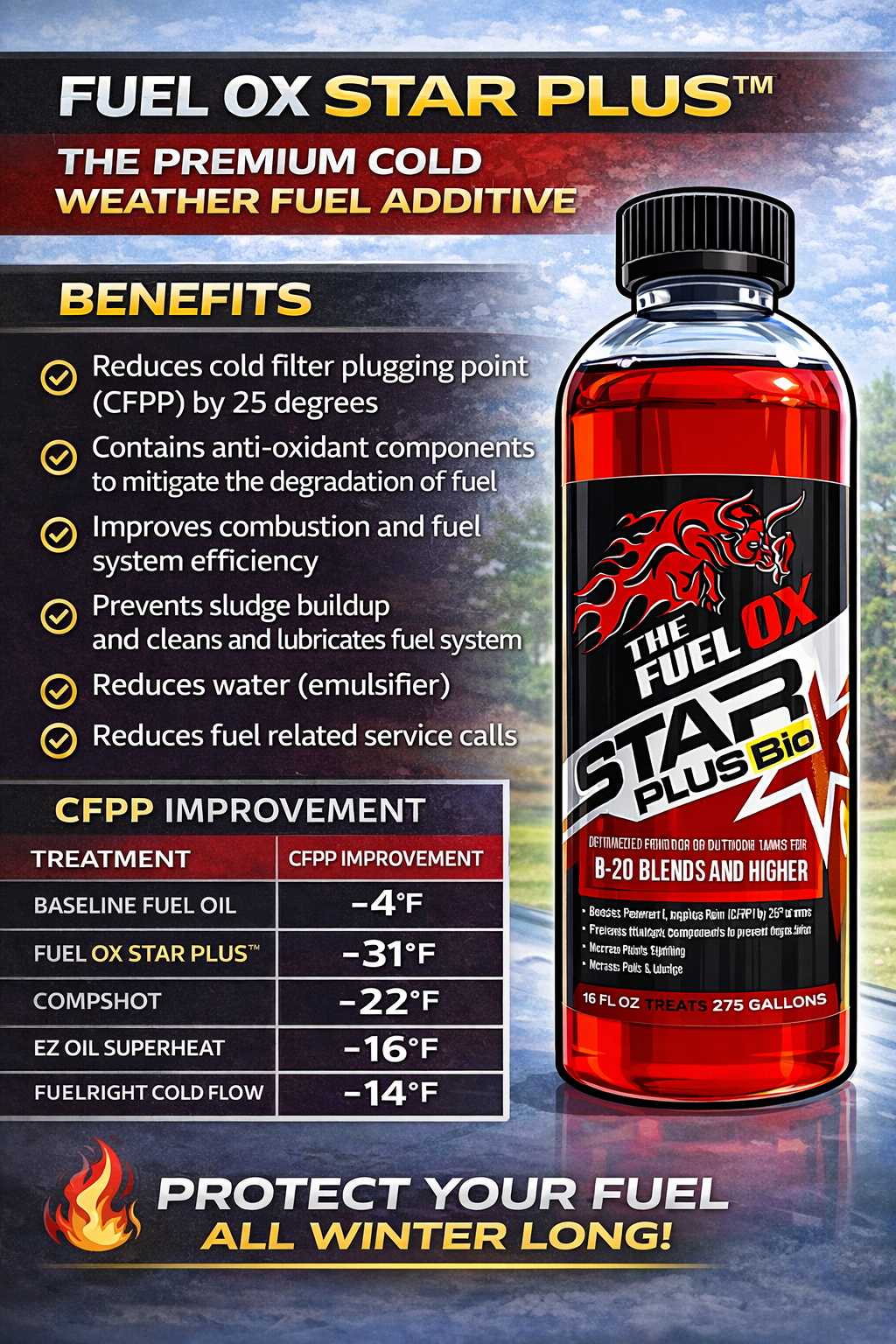
Kerosene is recommended for all outdoor tanks

Here you will find examples of common gauges that may be installed on your tank. (Always refer to your tank manufacturer for guidance on compatible gauge types.)
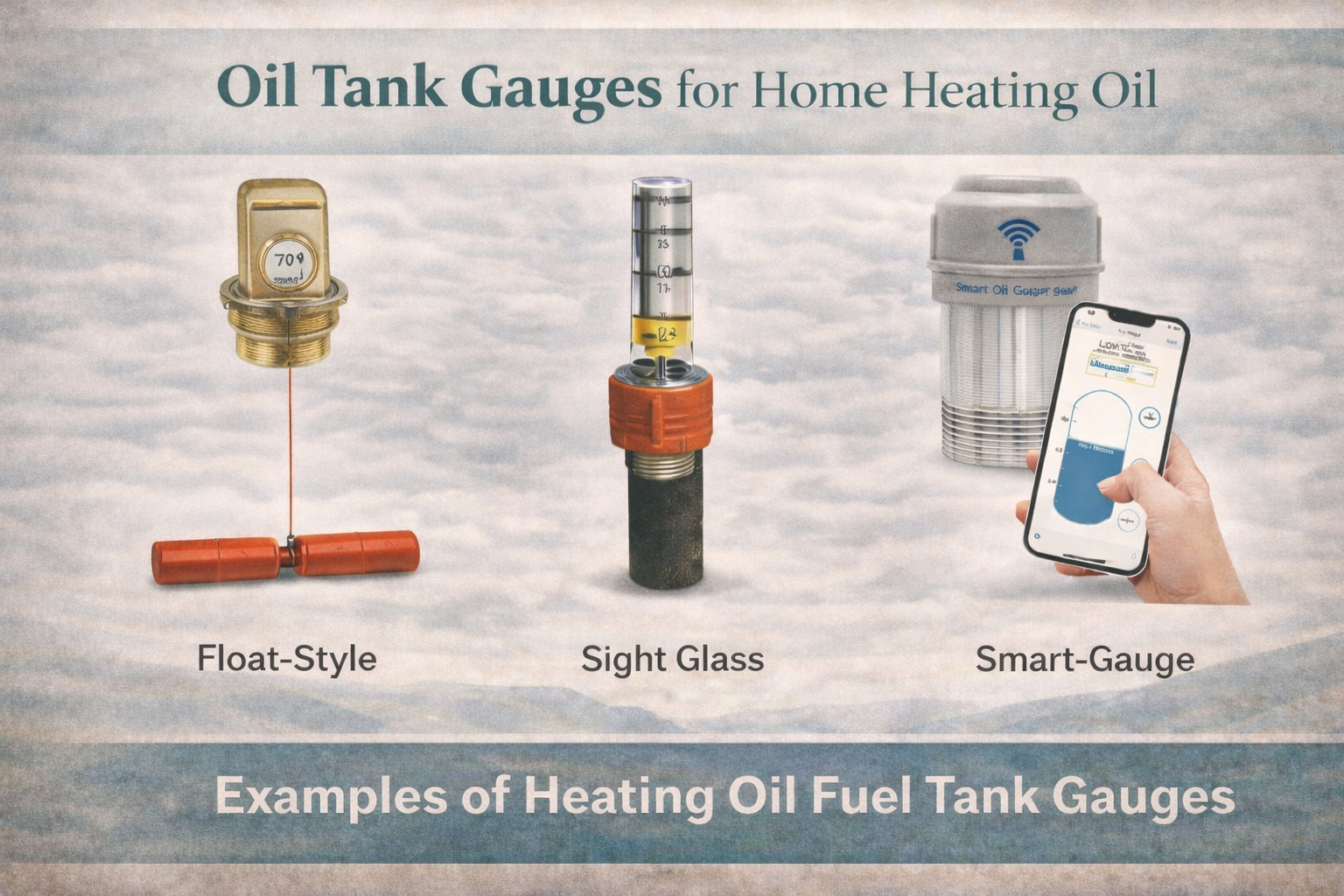
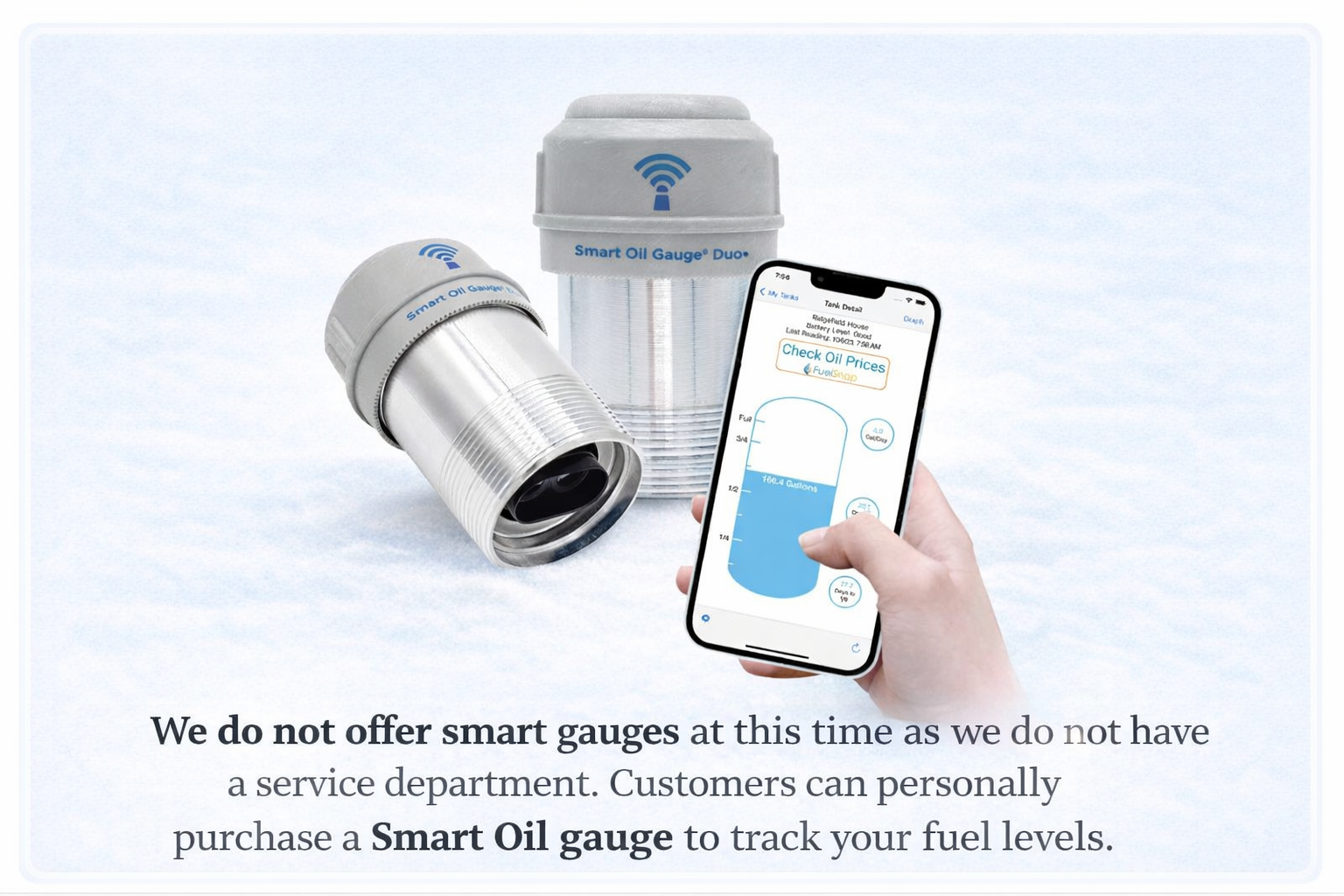
Most tanks have a small glass cylinder or dial located on the top or side — this is your oil tank gauge. It indicates how full your tank is by showing the current fuel level. Because gauges can vary by brand and style, it’s best to consult the manufacturer’s instructions for accurate readings and use.
If a replacement is needed, gauges can be purchased through a service company, at Security Supply in Johnstown, or from reputable online retailers.


Every tank should have a working whistle
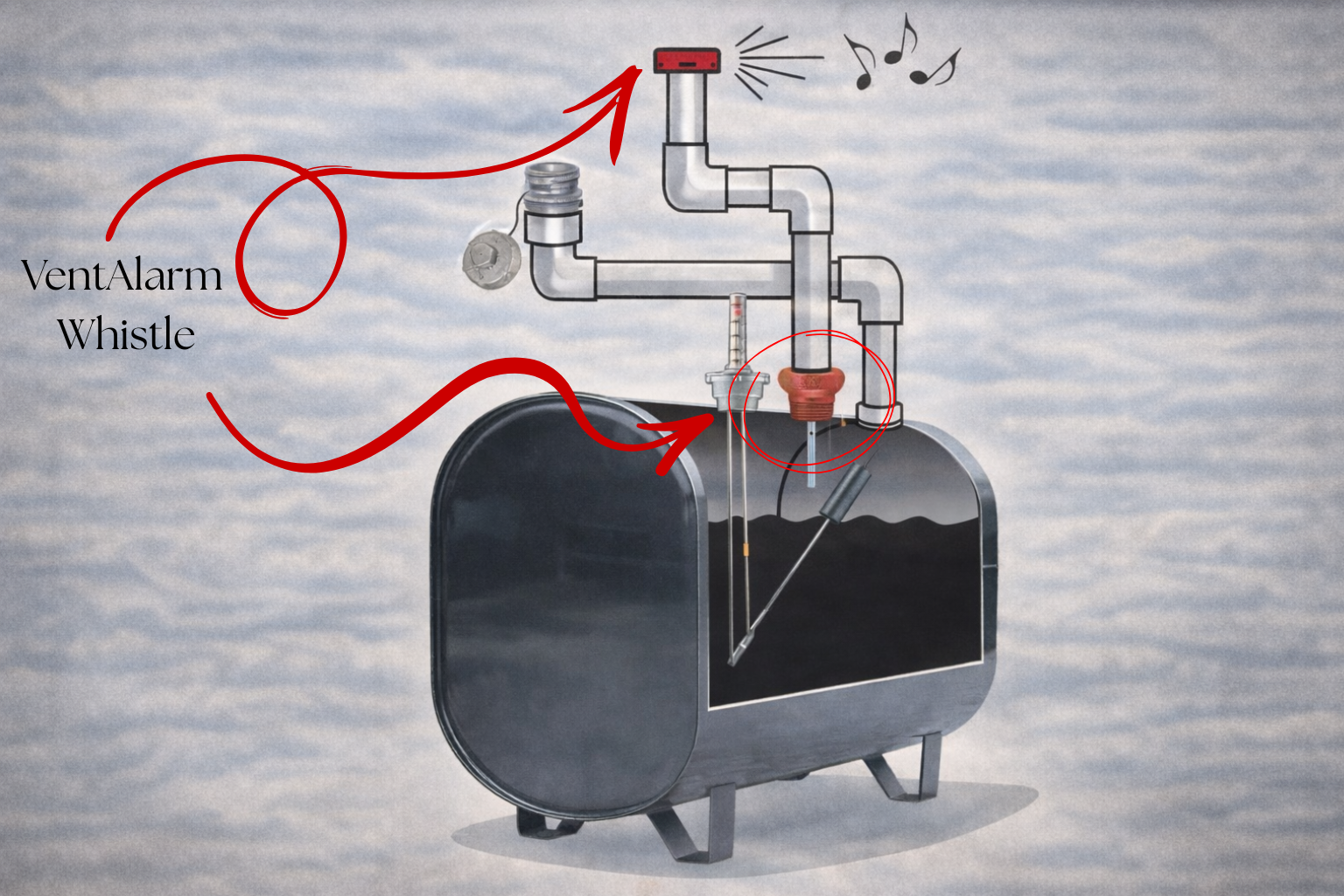
When the whistle stops sounding this is the signal to the driver to stop pumping fuel. This prevents spills from overfilling the tank.
Whistles can be purchased from:
Your service company
Security Supply in Johnstown
Online retailers

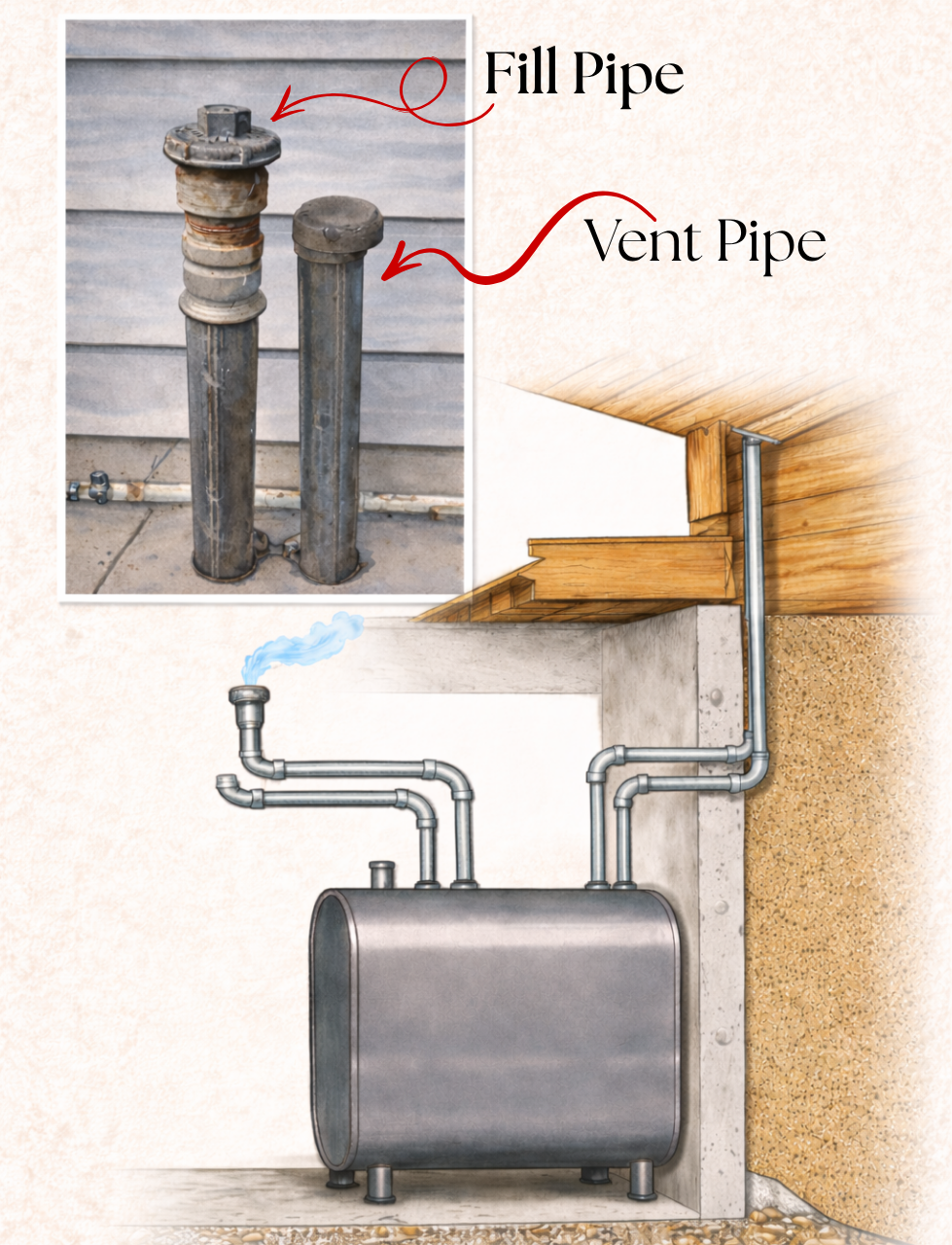
IMPORTANT!
If a tank has been removed or relocated, any unused fill pipes should be properly sealed and clearly marked to prevent accidental delivery into a line that is no longer connected to a tank.
Tanks are most commonly located Outdoors, Indoors, Underground
Outdoor tanks typically have the fill and vent access located right on the tank itself, without any additional piping needed.
Underground tanks typically have both the fill and vent pipes coming up out of the ground near where the tank is buried, making them easy to locate for delivery.
Most indoor fuel tanks are located in a basement or garage.
In many cases, the fill and vent pipes are run outside, so your delivery can be completed without needing access inside. You can usually spot these pipes along the outside of your home near the foundation or coming up from the ground.
If your tank does not have an outside fill connection, no problem—we’ll just need someone home at the time of delivery so the driver can access the tank inside.
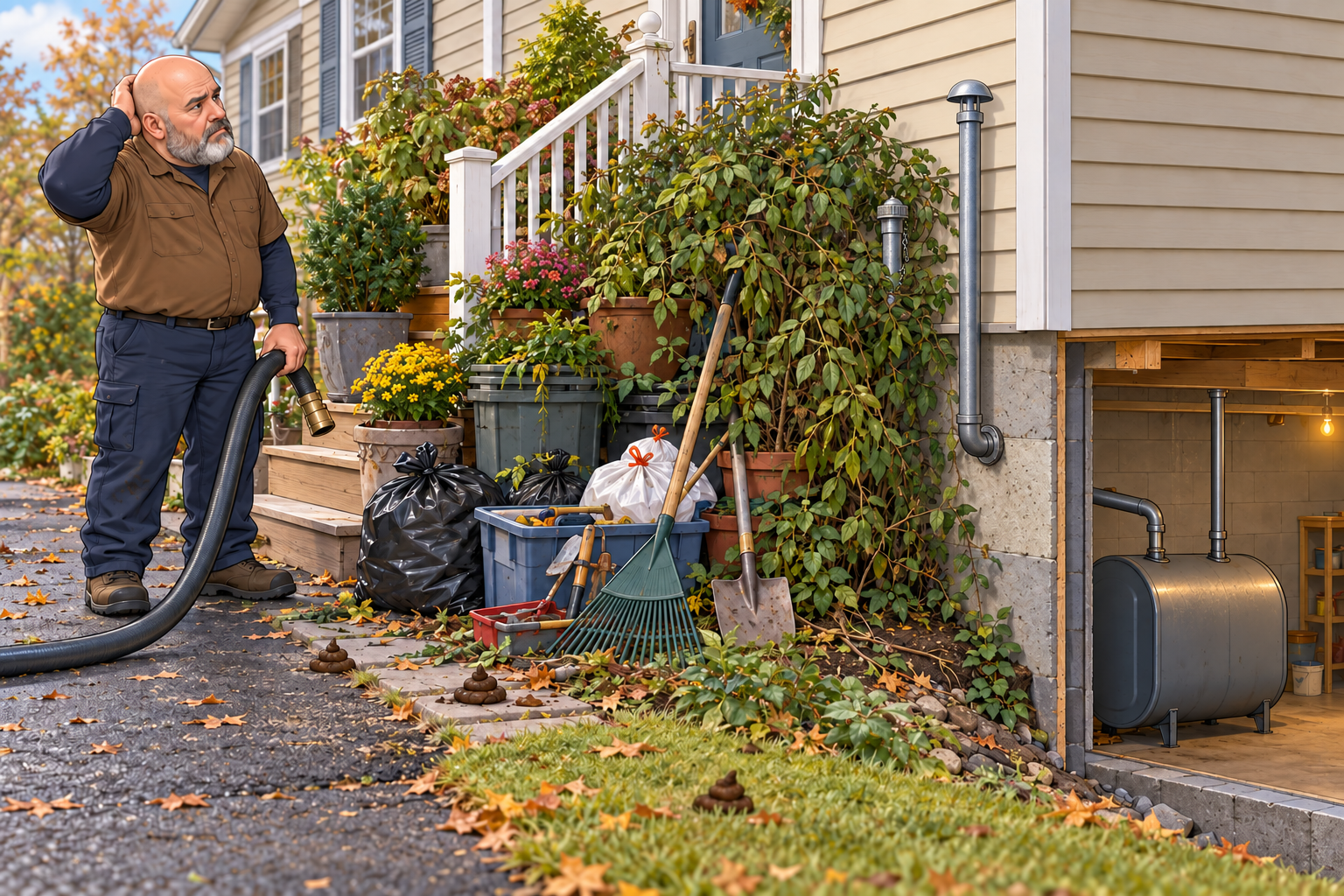
An ideal delivery setup provides a clear driveway and an unobstructed path to the fill pipe, with enough room for the driver to reach and connect the delivery hose comfortably. This includes surfaces free of snow and ice, branches and bushes trimmed back, and an access area free of tools, garbage, potted plants, pet waste, and other obstacles.
Easy access helps our drivers complete deliveries safely and efficiently. With many stops throughout the day, time spent moving obstacles can delay deliveries for other customers.
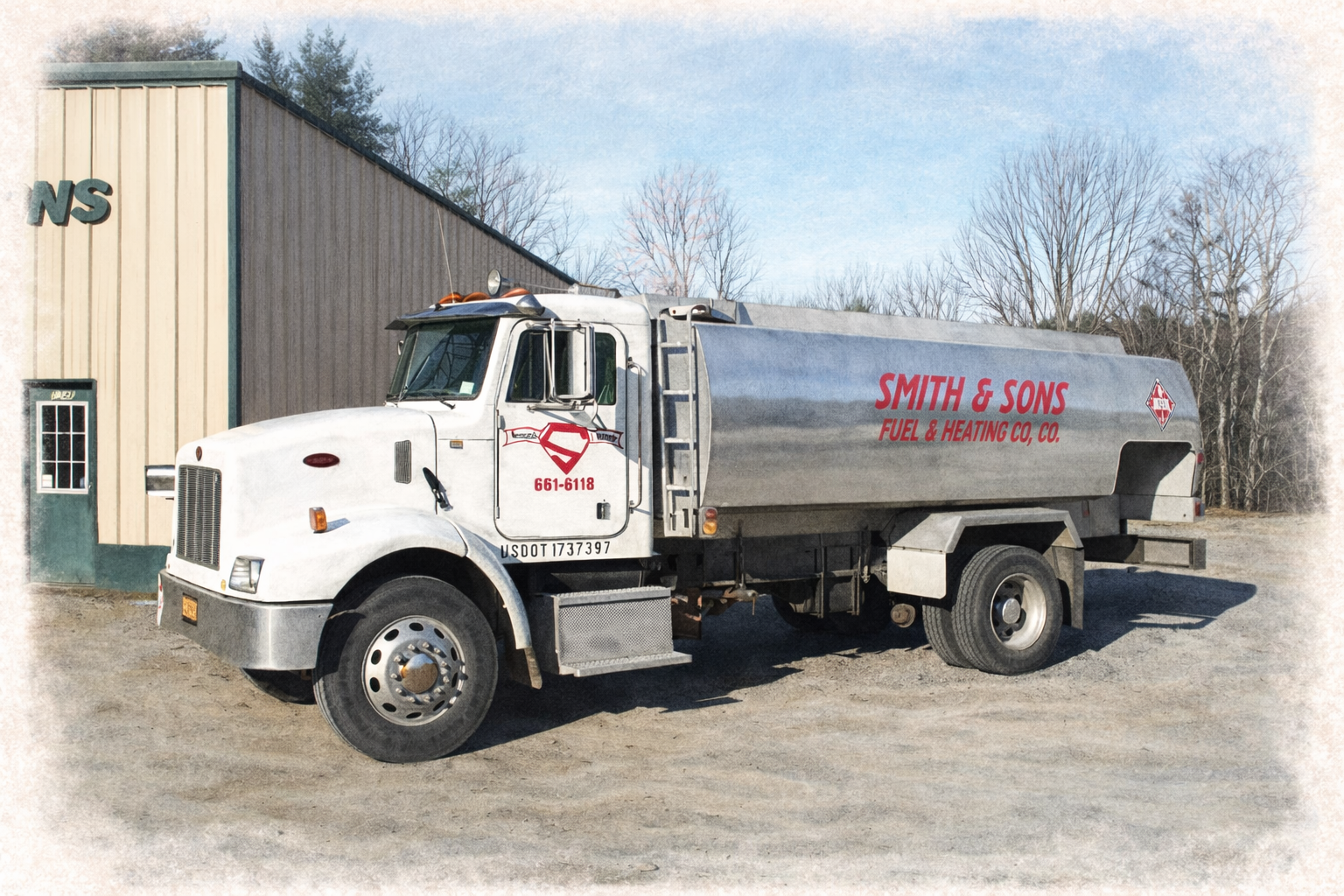

Fuel delivery trucks are 12 foot wide (w/mirrors) and heavy 2-wheel drive vehicles
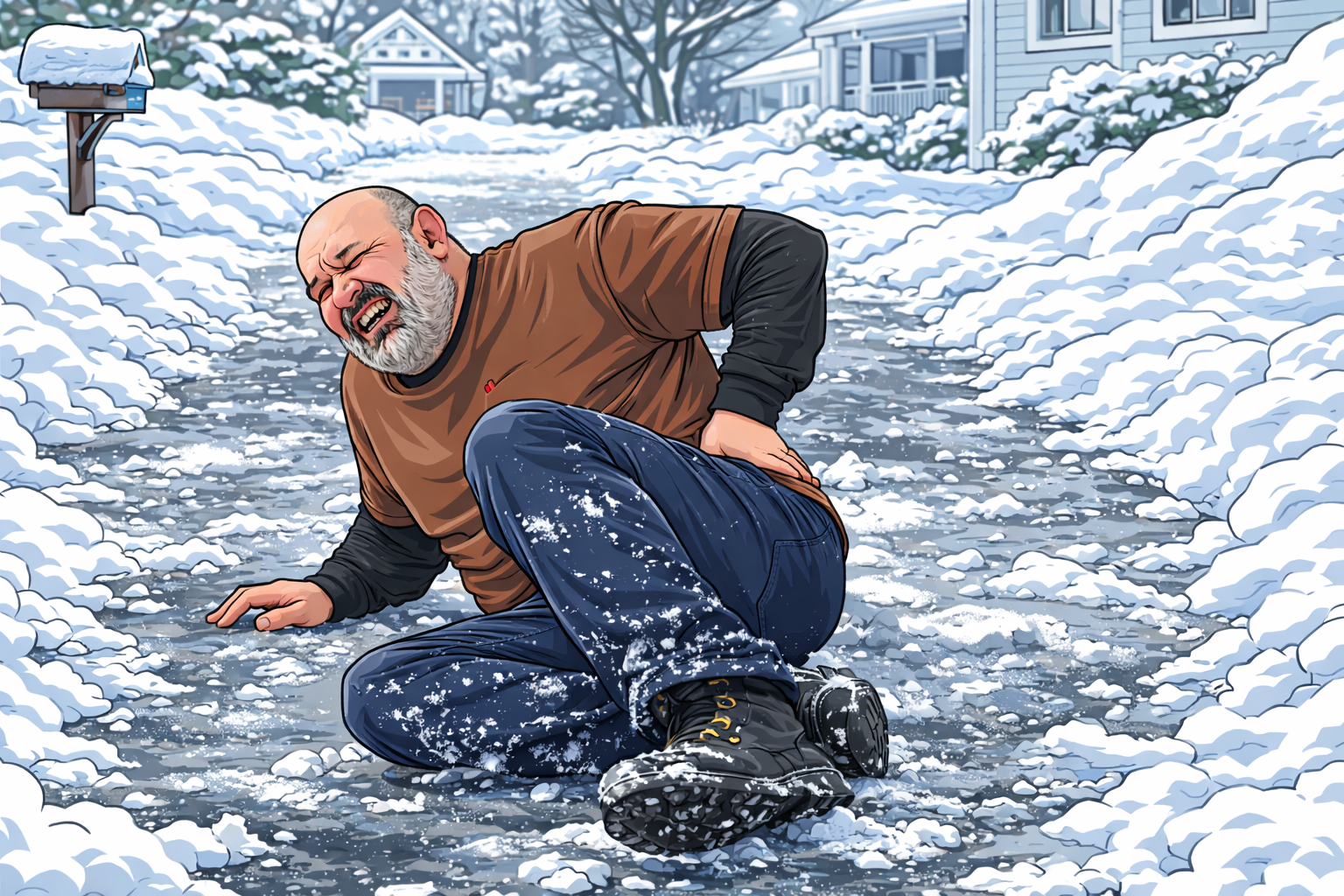
During the winter, driveways should be properly plowed and sanded, with enough width for the truck to enter and safely turn around if needed. In the spring, especially for dirt driveways, a layer of stone is important to prevent soft, muddy conditions that can cause trucks to get stuck.
Keeping your driveway well-maintained helps ensure safe, timely deliveries.
If a driver arrives and determines that access is unsafe, the delivery may need to be rescheduled until conditions improve. Tow bills can exceed $2,000 and may also delay other scheduled deliveries.
Please note that fees may apply if a delivery cannot be completed due to unsafe or inadequate driveway conditions, as travel time and fuel costs are still incurred.
We strive for customer satisfaction while prioritizing our driver safety.